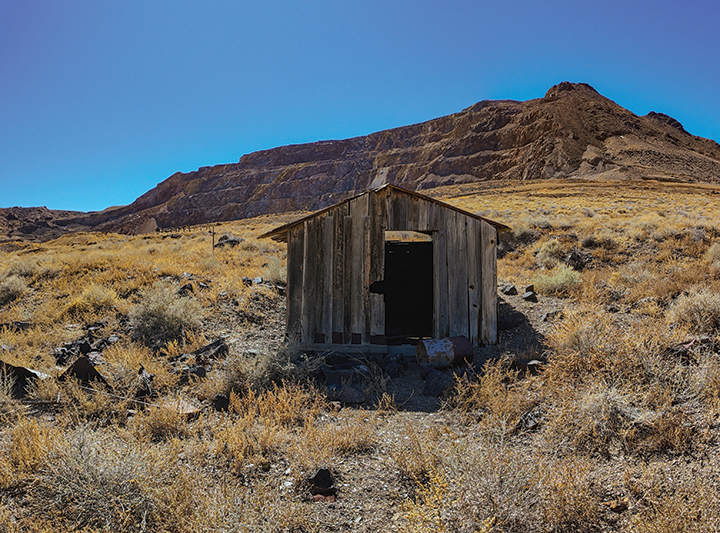
Perched in the secluded mountains of Mineral County, Nevada, Candelaria is a ghost town that evokes memories of the state’s silver rush period. Once a bustling mining settlement, the town’s skeletal remnants are a stark reminder of the unpredictable twists of fate and the lasting charm of the American West.
Founded in the early 1860s after the discovery of rich silver deposits, Candelaria quickly exploded into a bustling hub. Tent cities morphed into sturdy brick structures, saloons echoed with the sounds of revelry, and the promise of riches drew prospectors, merchants, and gamblers alike. At its peak in the late 1870s, Candelaria boasted a population estimated between 1,500 and 3,000 souls, all fueled by the relentless pursuit of silver.
Unlike many other boomtowns, Candelaria faced a unique challenge: water scarcity. Located in a harsh, arid environment, the town struggled to secure a reliable water source. This limitation hampered development and ultimately contributed to its decline. Water had to be transported from distant springs, a costly and inefficient undertaking.
Despite the water woes, Candelaria flourished for a time. The Northern Belle Mill, a massive complex dedicated to processing ore, became a central fixture of the town. The mill’s ruins, still standing today, offer a stark visual representation of the scale of the mining operations. Visitors can explore the crumbling stone walls, imagine the deafening roar of the machinery, and feel the spirit of the men who toiled within.
However, the prosperity was not built to last. As the readily accessible silver deposits began to dwindle, the town’s fortunes took a turn for the worse. The lack of water continued to plague operations, making it increasingly difficult and expensive to extract the remaining ore.
By the early 20th century, Candelaria was in rapid decline. Businesses closed, families moved on in search of new opportunities, and the echoes of laughter and commerce faded into the vast emptiness of the surrounding landscape. The final blow came in the 1930s when the last major mining operations ceased.
Today, Candelaria stands as a captivating ghost town, a photographer’s dream, and a historian’s treasure trove. Visitors can wander among the remnants of its former glory, exploring the crumbling walls of the Northern Belle Mill, the weathered foundations of homes and businesses, and the silent remains of the town’s cemetery.
Visiting Candelaria:
Access: Candelaria is located off of US Highway 6, west of Tonopah, Nevada. The final access road is unpaved and can be rough, so a high-clearance vehicle is recommended.
Respect: Remember that Candelaria is a fragile historical site. Please treat it with respect and avoid disturbing or removing anything.
Safety: Be aware of your surroundings and exercise caution. The buildings are unstable, and there are potential hazards such as open mine shafts. Bring plenty of water, sunscreen, and appropriate clothing for the desert environment.
Photography: Candelaria offers incredible photographic opportunities, especially at sunrise and sunset. Capture the beauty and the melancholy of this forgotten place.
Candelaria is more than just a collection of crumbling buildings; it is a living testament to the boom-and-bust cycles of the American West. It whispers tales of ambition, hardship, and the enduring human spirit. A visit to this Nevada ghost town offers a glimpse into a bygone era and a chance to connect with the history of a land forged in the pursuit of silver. So, venture out, explore, and let the ghost stories of Candelaria capture your imagination.
For more information, please visit:
https://www.TheOutbound.com/nevada/photography/explore-candelaria-ghost-town.